Automatic reversal happens because the garage door's safety system detects an obstruction, misaligned sensors, or incorrect force settings, triggering an immediate reopening. Common culprits include dirty photo-eye sensors, worn springs, debris in the tracks, or miscalibrated limit settings. Precision Garage Door of Torrance diagnoses these safety-reversal triggers and restores proper closing function for homeowners experiencing this issue.
Key Takeaways
- Garage door reversal at floor level indicates a safety trigger, a setting error, or a mechanical problem that needs diagnosis.
- Malfunctioning sensors, broken remotes, and electrical issues cause garage doors to open and close unexpectedly.
- Safety features automatically reverse your door when it detects an obstruction or sensor malfunction during closing.
- Professional repair is essential for garage door issues because diagnosis involves hazards and risks.
Why does my garage door close and then open again?
A garage door that closes and then immediately reverses is not a random malfunction. This behavior is a built-in safety feature designed to prevent the door from crushing objects, pets, or people. The system detects an obstruction or fault and reverses to avoid injury or damage.
What causes a garage door to reverse after closing?
Several common issues trigger this safety response. The most frequent causes include dirty or misaligned safety sensors, incorrect limit settings, and miscalibrated force sensitivity. Debris in the tracks, worn springs, a failing control board, or a stuck remote control can also cause the door to reverse. Each of these problems interrupts the closing signal and tells the opener to stop and reverse.
How can homeowners identify the problem?
Homeowners can start with a simple visual inspection. Check the safety sensors near the floor on each side of the door. Look for dirt, cobwebs, or misalignment that blocks the infrared beam. Clean the sensor lenses with a soft cloth, and make sure both sensors face each other directly. If the sensors appear clean and aligned, the issue may involve the opener's limit or force settings, which require professional adjustment.
A garage door that closes and then opens repeatedly leaves the door open and the home vulnerable. This condition signals a problem that needs prompt attention. Ignoring a garage door reversal pattern risks security breaches and potential damage to the door mechanism. Professional garage door repair addresses the root cause and restores reliable operation.
How do I troubleshoot a reversing garage door?
A garage door that closes then opens is responding to a safety trigger, a setting error, or a mechanical fault. Troubleshooting starts with the simplest, most common causes before moving to complex parts. Most homeowners can safely diagnose the issue in minutes. Leave garage door repair to a professional when the cause involves springs or electrical components.
Step 1: Check the photo-eye sensors. These safety devices sit near the base of the tracks, just above the floor. Dirt, spider webs, or misalignment between the two sensors blocks the invisible beam. When the beam breaks, the opener reverses the door to prevent injury. Wipe the lenses with a clean cloth and verify the indicator lights on each sensor glow steadily.
Step 2: Inspect the tracks and rollers. Debris in the tracks or a stuck wheel forces the door to bind, which the opener reads as an obstruction. Look for dents, rust, or buildup along the track path. Clear any visible debris and confirm the rollers move freely within their brackets.
Step 3: Test the remote and wall control. A stuck button on a remote or a faulty wall station sends a constant signal that confuses the opener. Remove the remote's battery and disconnect the wall control to see if the problem stops. If the door operates correctly with these disconnected, the issue lies in the control device.
Step 4: Adjust the limit and force settings. The opener's limit switch tells the door where "closed" ends, while the force setting controls how much pressure the motor applies. Incorrect adjustments cause the door to reverse before it fully seats. Locate the adjustment dials on the motor unit and make small, quarter-turn changes. Test the door after each adjustment.
When should a homeowner call a professional for a reversing garage door?
If a reversing garage door persists after basic troubleshooting, it needs professional attention. The garage door may reverse because of worn torsion springs, a failing control board, or electrical issues. These components sit under extreme tension and carry serious injury risk. A professional technician has the tools and training to diagnose and fix these hazards safely.
What causes a garage door to reverse after hitting the floor?
The garage door reverses after hitting the floor when the force settings are too sensitive or the limit switch is set incorrectly. The opener interprets the resistance as a collision and reverses direction. Misaligned sensors or worn springs produce the same symptom. A technician can recalibrate the opener and inspect the mechanical components to restore proper operation.
When should I call for professional garage door repair?
A door that garage door closes then opens repeatedly signals a safety system responding to a real problem. Homeowners should call for professional garage door repair when the issue persists after basic troubleshooting. Due to the hazards and risks involved in repairing garage doors, always call a professional to address the source of the issue.
What causes require expert attention?
Worn springs and a failing control board are complex mechanical issues that demand expert service. These components carry high tension and electrical risk. DIY fixes on these parts can cause serious injury. A certified technician diagnoses the root cause safely and correctly.
How quickly can a professional respond?
Precision Garage Door of Torrance delivers round-the-clock, same-day service with certified technicians. The team provides transparent, written estimates before any work begins. This approach removes guesswork and surprise costs.
Homeowners in Torrance trust the brand for good reason. Precision Garage Door of Torrance has earned a strong reputation through consistently reliable outcomes. That track record reflects dependable service on every call.
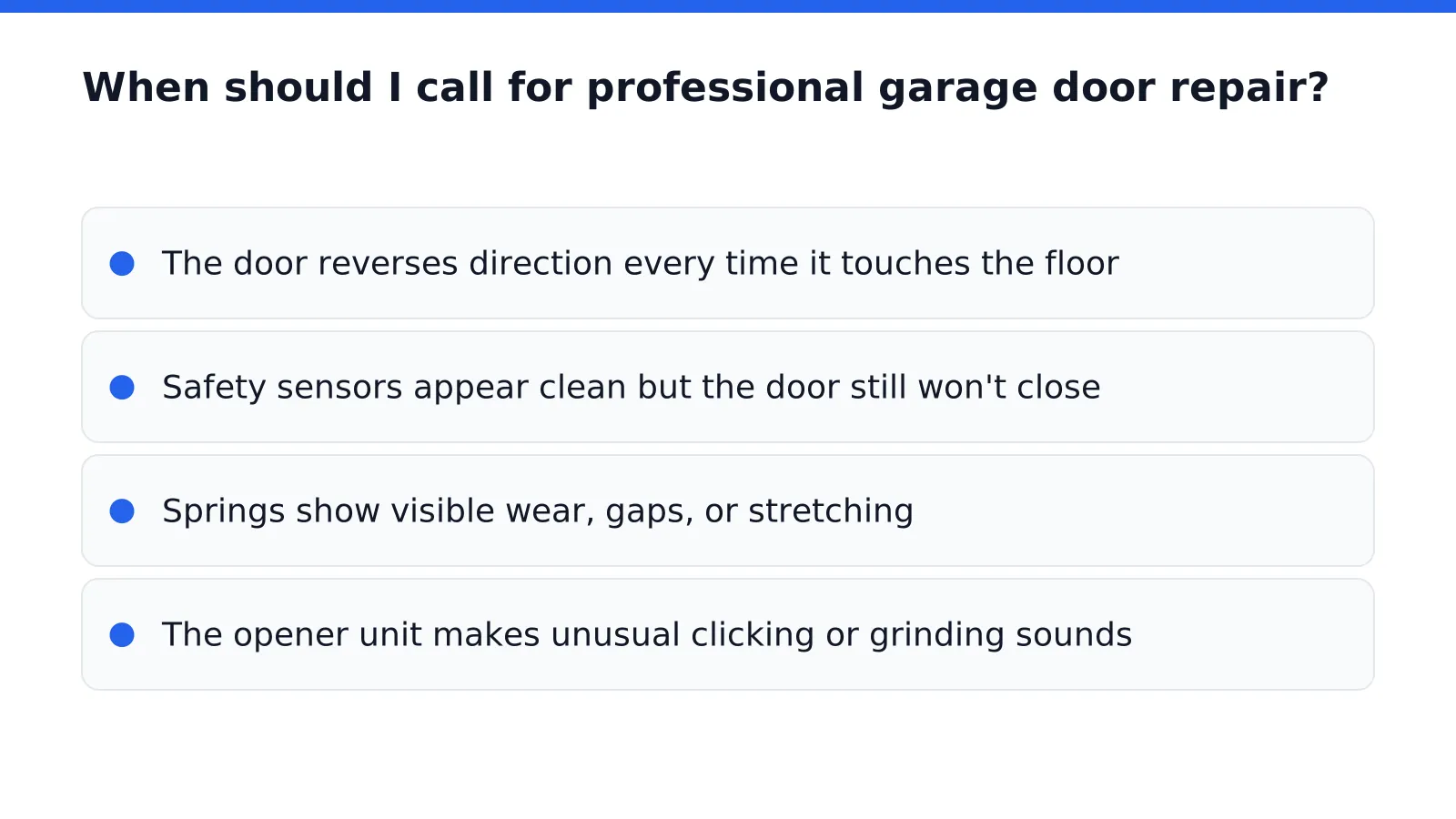
Signs that professional help is needed:
- The door reverses direction every time it touches the floor
- Safety sensors appear clean, but the door still won't close
- Springs show visible wear, gaps, or stretching
- The opener unit makes unusual clicking or grinding sounds
Delaying service leaves a home vulnerable. A malfunctioning door compromises security and poses a safety hazard to family members. Professional repair restores safe, dependable operation.
FAQ
Why does my garage door close and then open again?
The door's safety system detects an obstruction, misaligned sensors, or incorrect force settings during closing, triggering an automatic reversal
Conclusion
In closing, a garage door that closes and reopens signals an underlying issue that needs prompt attention, whether it's a misaligned sensor, worn springs, or obstructed tracks. Addressing these problems early prevents safety hazards and costly damage to your system. The structured diagnostic approach outlined here empowers you to identify the root cause with confidence. When professional expertise becomes necessary, Precision Garage Door of Torrance stands ready to restore your door's reliable operation and your peace of mind.