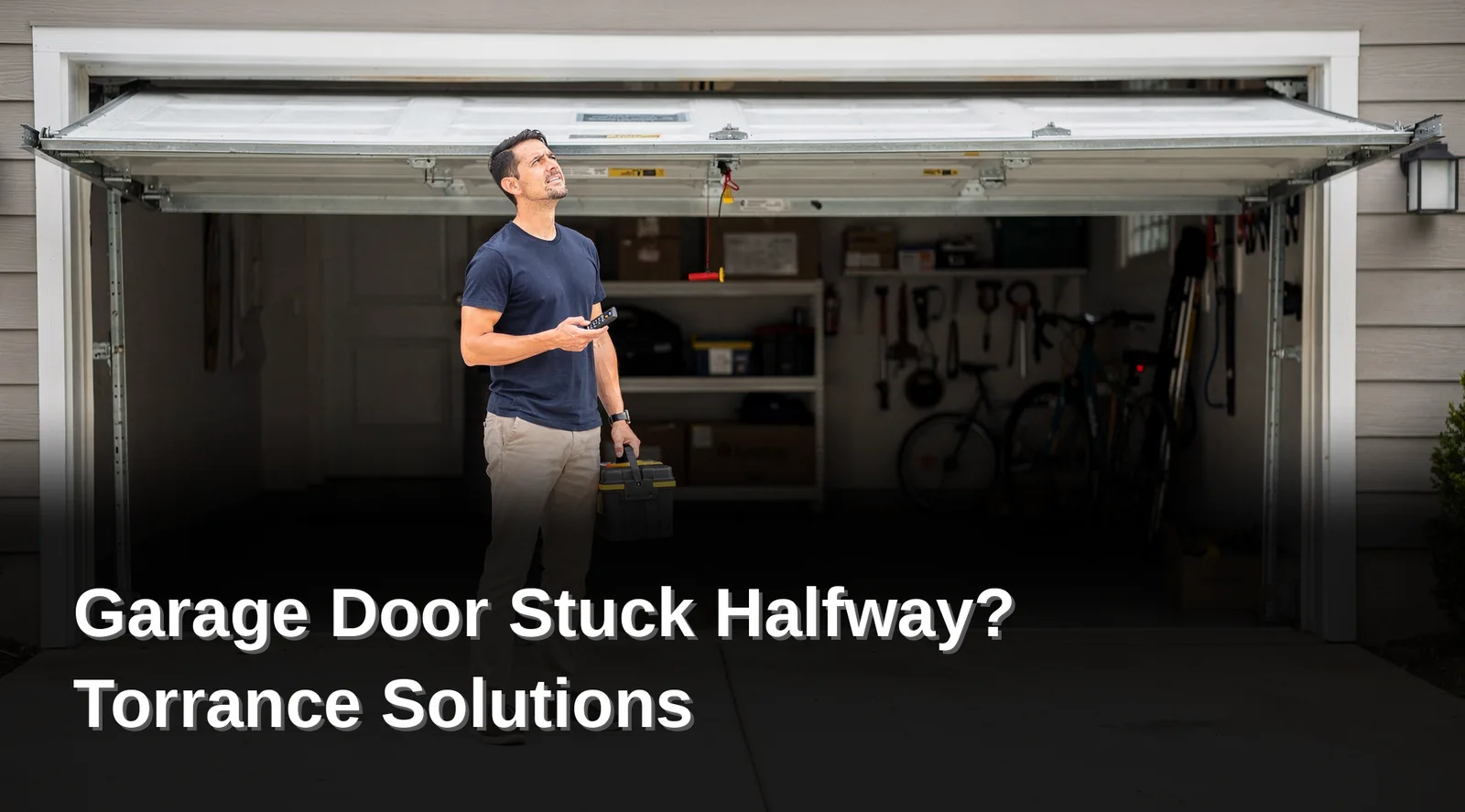
A garage door that worked perfectly yesterday and refuses to move today is one of the most frustrating household problems a homeowner can face. No gradual warning. No obvious sign that anything was wrong. Just one morning where pressing the button produces nothing useful, and the day falls apart around it.
Sudden garage door failures almost always have a specific cause. Understanding the cause makes the difference between a fast, targeted repair and an expensive guessing process. In Torrance, the South Bay’s coastal conditions add layers of wear that make certain failures far more common here than in drier inland cities.
This guide covers the most common causes of sudden garage door failures in Torrance, what each one looks like, and what to do the moment it happens.
Why Torrance Homes Sees More Sudden Failures
Torrance sits directly in the coastal zone of Los Angeles County. Ocean breezes carry salt particles inland daily. Marine fog deposits moisture on metal surfaces every morning. These conditions work against garage door components invisibly until one cycle finally pushes a weakened part past its limit.
Salt air accelerates corrosion on springs, cables, and hardware without visible surface rust until the damage is already structural. A spring that looks intact can carry internal corrosion that has reduced its load capacity significantly. When it reaches its limit, it fails completely and instantly.
Ocean moisture strips lubrication from moving parts faster than in drier climates. Santa Ana wind events add lateral pressure on hardware that daily use never creates. Together, these conditions produce sudden failures that seem random but are actually the predictable result of months of invisible coastal wear. Staying ahead of that wear through timely garage door repairs is the most effective way to prevent sudden failures before they happen.
Most Common Causes of Sudden Failures in Torrance
Each cause below produces specific symptoms pointing directly to the problem. Matching the symptom to the correct cause leads immediately to the right response.
Spring Failure
A broken torsion spring is the most common cause of a sudden, complete failure. Springs carry the door’s full weight on every cycle. When one snaps, it releases all stored tension instantly with a loud bang. The door becomes too heavy for the opener to lift and stops responding entirely. Coastal corrosion accelerates spring fatigue by penetrating the coil and weakening the metal from the inside. Worn, broken springs require immediate professional replacement because the stored tension makes DIY handling genuinely dangerous.
Cable Snap
Cables balance and guide the door through every movement. Coastal moisture frays cable strands gradually and invisibly until the remaining cable snaps under normal load. A door that drops on one side or jams mid-cycle has almost certainly lost a cable. Damaged rollers and cables left unaddressed risk structural damage to the frame and opener on every subsequent attempted use.
Opener Motor Failure
A burned-out opener motor stops responding completely without any mechanical noise. Motor failures in Torrance often trace back to months of compensating for weakening springs. As spring tension decreases, the motor works harder on every cycle until internal components burn out. Replacing the opener without addressing the spring tension sends the new unit through the same failure cycle.
Track Misalignment
A door that grinds, binds, or stops partway has a track misalignment blocking the rollers. It develops gradually from loose hardware, coastal settling, or Santa Ana wind events. It rarely announces itself until the offset jams the door completely. Forcing a misaligned door manually bends the track further and can pull the mounting hardware from the wall.
Sensor Blockage or Failure
A door that refuses to close or reverses immediately has a sensor issue. Salt air and coastal fog deposit residue on sensor lenses that creates the same effect as a physical obstruction. Wiping both lenses clean and confirming alignment resolves most sensor failures immediately. Persistent failures after cleaning point to wiring corrosion needing professional replacement.
Dead Power Supply
Before assuming any mechanical failure, check the simplest causes first. A tripped circuit breaker, an unplugged unit, or a dead remote battery can make a fully functional system appear completely broken. These checks take under two minutes and resolve a surprising number of apparent sudden failures.
Identifying the correct cause quickly prevents the forced handling that turns a single component failure into a multi-part repair.
Why Coastal Failures Spread Faster Than Expected
Garage door components are mechanically interconnected. When one fails suddenly under coastal stress, the surrounding components absorb a shock load they were not designed to handle. A snapped spring releases all its stored tension instantly. That energy transfers through cables and the opener mechanism. A cable already showing coastal corrosion may not survive that sudden load transfer.
What begins as a single component failure can become a two or three-component repair within seconds of the initial event. A safety inspection after any sudden failure identifies every component affected before additional attempts to operate the door cause further damage to parts that were compromised but not yet visibly failed.
A technician who only replaces the obviously failed component and ignores the surrounding hardware leaves the system set up for the next sudden failure within weeks.
What to Do the Moment Your Garage Door Fails Suddenly
Stop pressing the remote. Every repeated attempt adds stress to components already under coastal fatigue. Disconnect the opener using the red emergency release cord if the door is fully closed and you need to access the garage manually. Only do this when the door is confirmed fully closed, since a door with a broken spring drops immediately when released from the automatic drive.
Keep the area around the door clear. A door under failing tension can shift or drop without warning. Keep children and vehicles away from the opening until a professional has assessed the full system.
Contact a professional service for a same-day diagnosis. Most sudden failures in Torrance have a specific, fixable cause. A technician arriving with parts and accessories stocked for coastal environments resolves the majority of sudden failures in a single visit.
Torrance Doors Fail Fast. The Fix Should Be Faster.
A sudden garage door failure in Torrance is rarely random. It is the coastal environment delivering the final outcome of a process underway for months. Salt air, marine moisture, and daily thermal cycling all contribute to wear that culminates in the moment the door stops responding.
The right professional service diagnoses every contributing factor, addresses each affected component, and leaves the system protected against the conditions that caused the failure. That approach is what separates a repair that lasts from one that fails again before the next season arrives.
Do not force it and do not wait. Contact Precision Garage Door Service and get your garage door diagnosed, repaired, and protected against everything the South Bay coast delivers to your system every single day.