Salt Air Garage Door Damage: Coastal Protection Guide
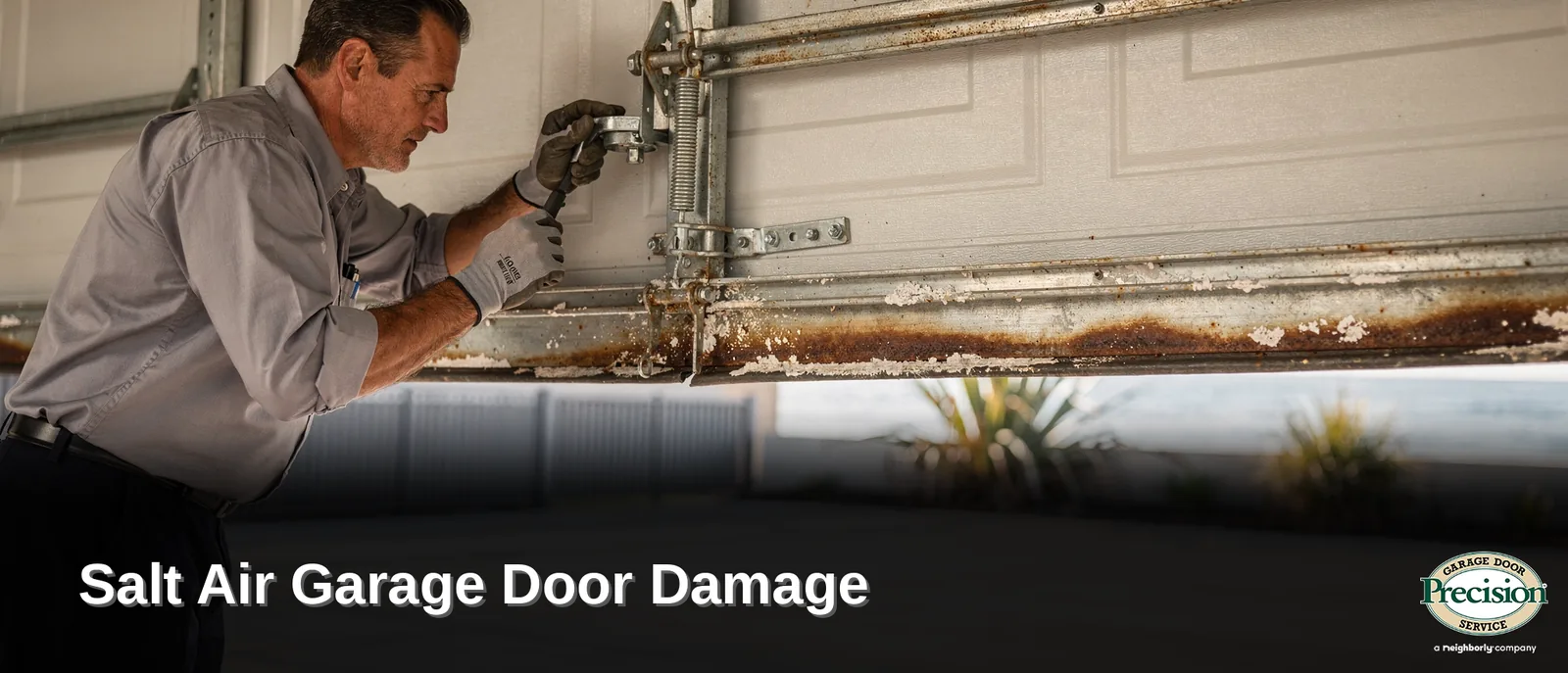
Salt air corrodes garage door springs, cables, and roller stems, producing orange or brown rust spots and chalky white buildup on metal parts. Corrosion stiffens hardware, causes grinding or jerky movement, and weakens openers over time. Left unchecked, small rust patches progress into seized components or snapped springs, turning a minor issue into a costly repair. Explained in How Torrance Coastal Weather Affects Your Garage Door.
Key Takeaways
-
Salt air causes orange or brown rust spots on springs, cables, and roller stems near coastal homes.
-
White chalky buildup accumulates on metal parts due to constant exposure to salty ocean moisture.
-
Garage doors produce grinding, squealing sounds and jerky movements when salt air corrodes internal components.
-
Paint bubbles and flakes on door panels as salt air deteriorates protective coatings within months.
Salt air causes orange or brown rust spots on springs, cables, and roller stems near coastal homes.
White chalky buildup accumulates on metal parts due to constant exposure to salty ocean moisture.
Garage doors produce grinding, squealing sounds and jerky movements when salt air corrodes internal components.
Paint bubbles and flakes on door panels as salt air deteriorates protective coatings within months.
How does salt air damage garage door components?
Salt air garage door damage begins when microscopic salt particles in coastal breezes interact with metal hardware. Moisture in the humid air reacts with this salt residue, creating an electrolytic environment that accelerates garage door corrosion at a much faster rate than inland conditions. This chemical reaction attacks every exposed metal surface on the door system.
What parts of a garage door fail first from salt exposure?
Garage door spring corrosion appears as orange or brown rust spots along the coiled wire surface, as detailed in Signs Your Garage Door Springs Need Replacement in Torrance. Garage door rollers hinges rust develops on the bearing stems and pivot points, causing grinding noises during operation. Coastal moisture weakens springs, rollers, cables, and brackets over time, reducing their structural integrity.
How does salt residue damage protective coatings?
Salt residue can remain on metal surfaces for long periods without proper cleaning. This buildup slowly damages protective coatings, exposing bare metal underneath. Once the coating fails, corrosion accelerates rapidly.
-
Springs — rust spots weaken tension capacity, increasing snap risk
-
Rollers — seized bearings create jerky door movement
-
Cables — fraying from corrosion reduces load tolerance
-
Brackets — pitted mounting points compromise door alignment
Springs — rust spots weaken tension capacity, increasing snap risk
Rollers — seized bearings create jerky door movement
Cables — fraying from corrosion reduces load tolerance
Brackets — pitted mounting points compromise door alignment
Without intervention, small rust spots can lead to seized hardware or snapped springs. The door becomes unreliable, noisy, and unsafe to operate.
What are the signs of garage door corrosion?
Salt air garage door damage announces itself through several visible and audible clues. Homeowners who catch these early warning signs can address problems before they escalate into costly repairs. Ignoring these indicators allows small rust spots to transform into seized hardware or snapped components.
What does salt corrosion look like on garage door hardware?
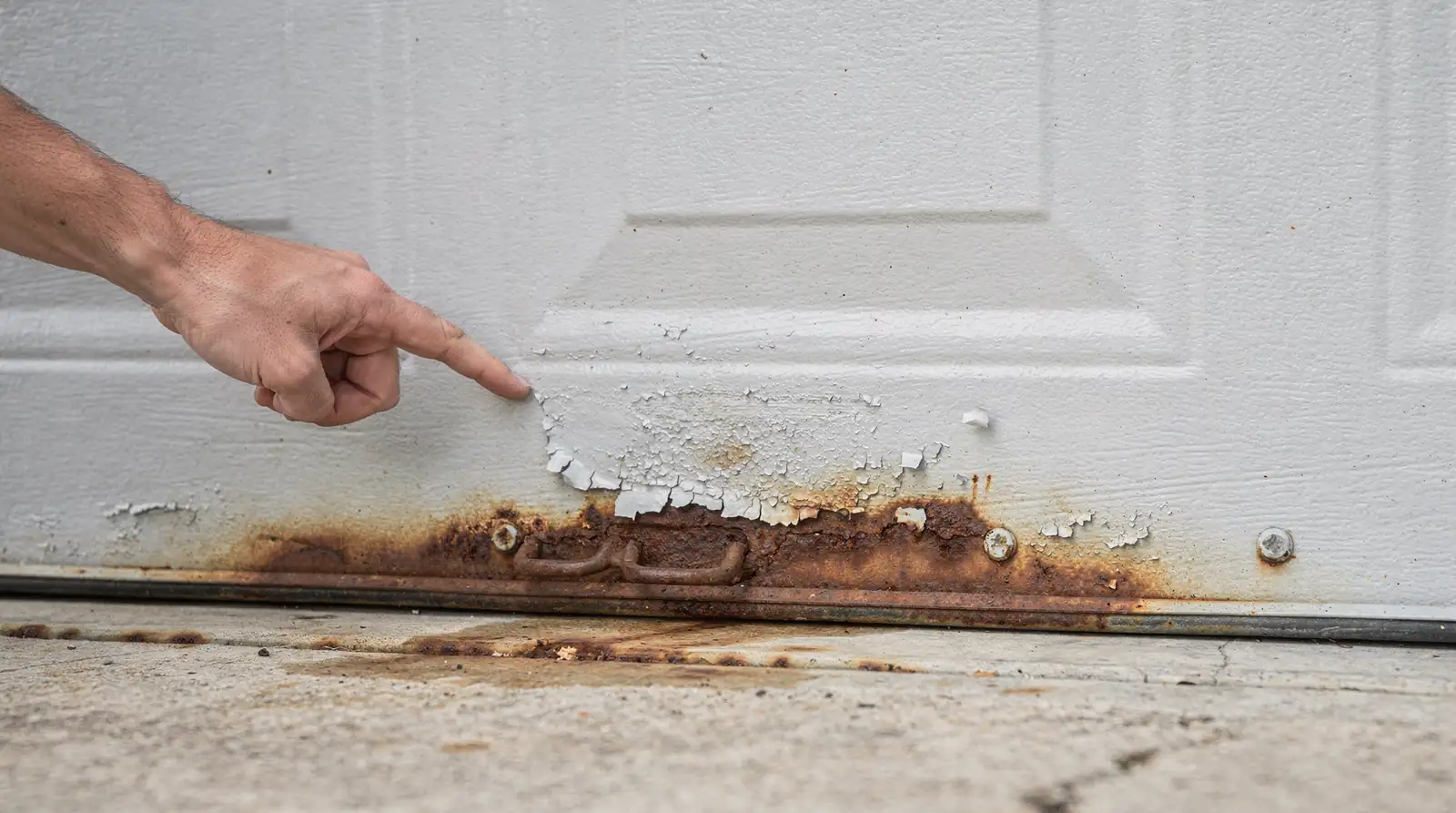
White, chalky buildup on metal parts signals active salt exposure. This powdery residue appears on springs, hinges, and track surfaces. Orange or brown rust spots on springs, cables, or roller stems indicate that corrosion has already penetrated the protective coating. Paint that is bubbling or flaking on the panels reveals moisture. Salt have compromised the finish, leaving the underlying metal vulnerable.
How does corrosion affect garage door operation?
Grinding, squealing, or a door that moves in jerks confirms that garage door rollers hinges rust has created friction in the track system. Garage door springs corrosion shows up as hardware that looks stiff or pitted, reducing the spring’s ability to counterbalance the door weight. An opener that has gotten slow or unreliable often results from salt-related wear on moving components, forcing the motor to work harder than designed.
How can you protect your garage door near the ocean?
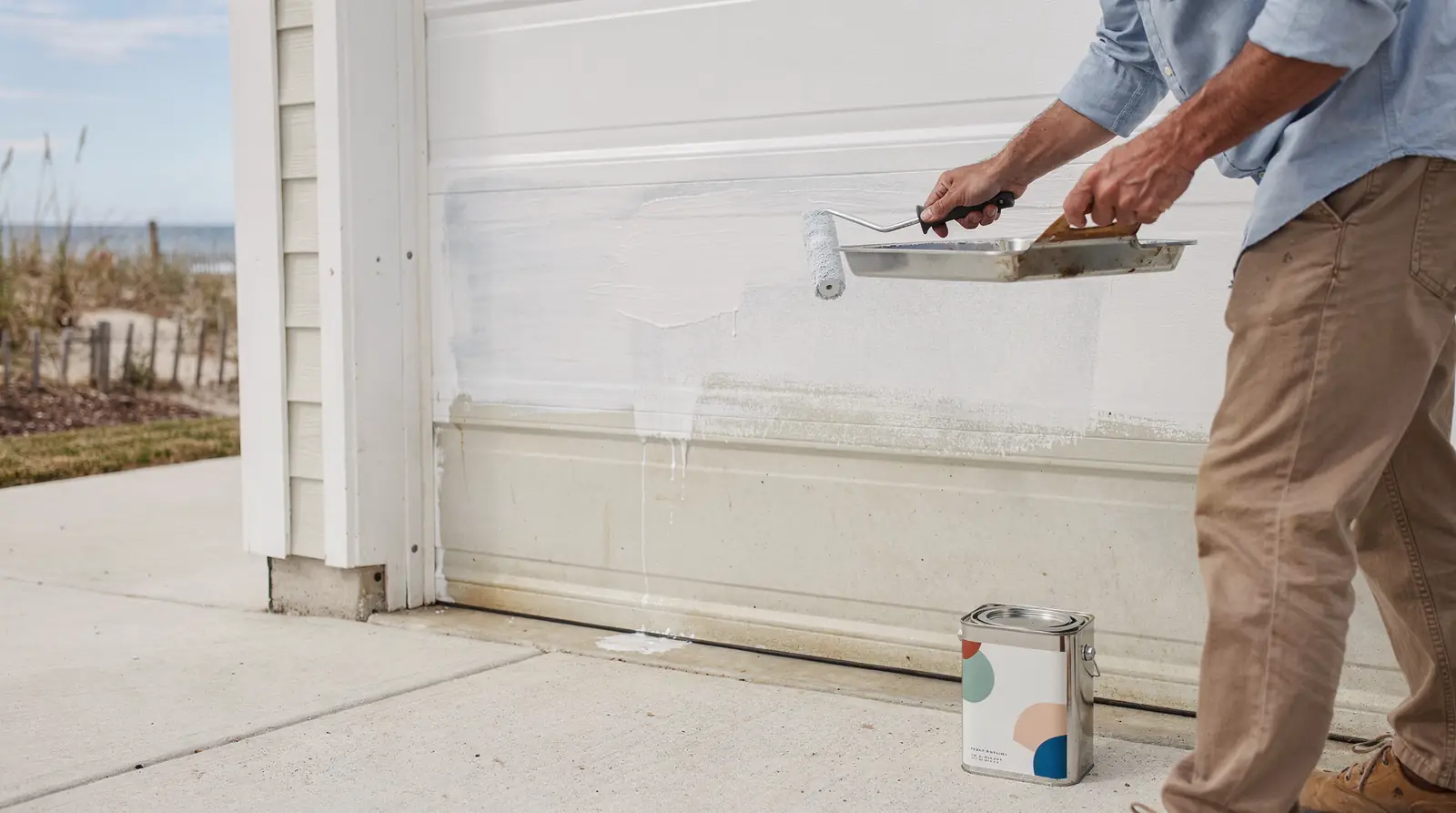
Protecting a garage door near the ocean requires a consistent routine of rinsing, lubrication, and material upgrades, making garage door maintenance near the ocean an essential part of homeownership. Coastal garage door maintenance, a key aspect of coastal home garage door care, starts with a simple step: rinsing the door with fresh water once a month. Homes right on the shoreline need this rinse more frequently. A garden hose works perfectly for this task. A pressure washer drives water into cracks and worsens existing damage, so homeowners should skip that tool entirely.
What lubricants work best for coastal garage doors?
Garage door corrosion accelerates when moving parts dry out and stiffen. Regular lubrication prevents rust and stiffness in coastal environments. A silicone-based or lithium-based lubricant applied to springs, hinges, and rollers keeps hardware moving smoothly. This practice directly addresses garage door springs corrosion and garage door rollers and hinges rust before they seize up.
Which garage door materials resist salt air best?
Choosing the best garage door for coastal climate reduces long-term repair costs. Steel doors with a galvanized coating or aluminum doors resist salt air better than standard untreated steel. Fiberglass and composite materials also perform well near the ocean. Precision Garage Door of Torrance is located in Torrance, CA, US.
FAQ
What does salt air do to garage door springs and cables?
Salt air corrodes springs, cables, and roller stems, producing orange or brown rust spots and chalky white buildup. Corrosion stiffens hardware, causes grinding or jerky movement, and eventually leads to seized components or snapped springs.
Which garage door parts fail first near the coast?
Springs, rollers, cables, and brackets fail first from salt exposure. Springs show rust spots that weaken tension capacity, rollers seize and cause jerky movement, cables fray and lose load tolerance, and brackets pit and compromise door alignment.
How do I know if my garage door has salt corrosion?
Look for white, chalky buildup on metal parts, orange or brown rust spots on springs and cables, and paint bubbling or flaking on panels. Grinding, squealing, or jerky door movement confirms corrosion is already affecting operation.