

Vehicle collisions, accidental impacts from cars or equipment, loose rollers, and misaligned brackets rank among the top causes of Why Your Garage Door Off Track Needs Immediate Repair. Catastrophic mechanical failure also distorts tracks, leaving doors crumpled and inoperable. Precision Garage
Key Takeaways
- Impact collisions and vehicle accidents bend garage door tracks, rendering doors inoperable and dangerous.
- Repeated daily use causes wear that gradually misaligns tracks over months or years.
- Bent tracks prevent smooth door operation, creating safety hazards for your family and property.
- Professional repair is essential; DIY fixes risk further damage and personal injury from springs.
What causes a garage door track to bend?
Garage door tracks bend mainly from daily wear, physical impact, or structural shifts, each requiring prompt attention to restore safe door operation.
Daily wear and tear ranks as the most overlooked cause. Operating a garage door multiple times each day gradually fatigues the metal rails and connecting hardware. Over months and years, the constant friction and weight transfer produce small deformations that accumulate into a visible bent garage door track.
Physical impact delivers immediate, severe damage. A vehicle collision with the door or track can crumple metal and knock the entire system off its rails. Catastrophic mechanical failure, such as a broken spring releasing uncontrolled force, also bends tracks in an instant.
Can a garage foundation cause track problems?
Yes. Structural shifts in the garage building itself cause tracks to bend or shift out of alignment over time. Foundation settling, wall movement, or frost heave in the concrete slab changes the geometry the tracks mount to, gradually forcing them out of true. Homeowners may notice track misalignment appearing months after visible foundation cracks or floor sloping.
Why does a bent track need immediate attention?
A bent garage door track can damage property and pose a safety hazard for occupants. The door may jam, slip off the rollers, or fall unexpectedly. These risks make prompt [Can Sunlight Interfere with Garage Door Sensors: Garage Door Repair](https://precisiondoortorrance.com/?p=8835) essential. Waiting increases the chance of costly secondary damage to the door panels, springs, and opener mechanism.
How can you spot a bent garage door track?
A bent garage door track shows up as visible misalignment and operational issues. Homeowners should inspect the metal tracks running along both sides of the door opening. A straight track allows smooth operation. A bent track creates resistance and uneven spacing between the track and the door panels.
What visual signs indicate a bent track?
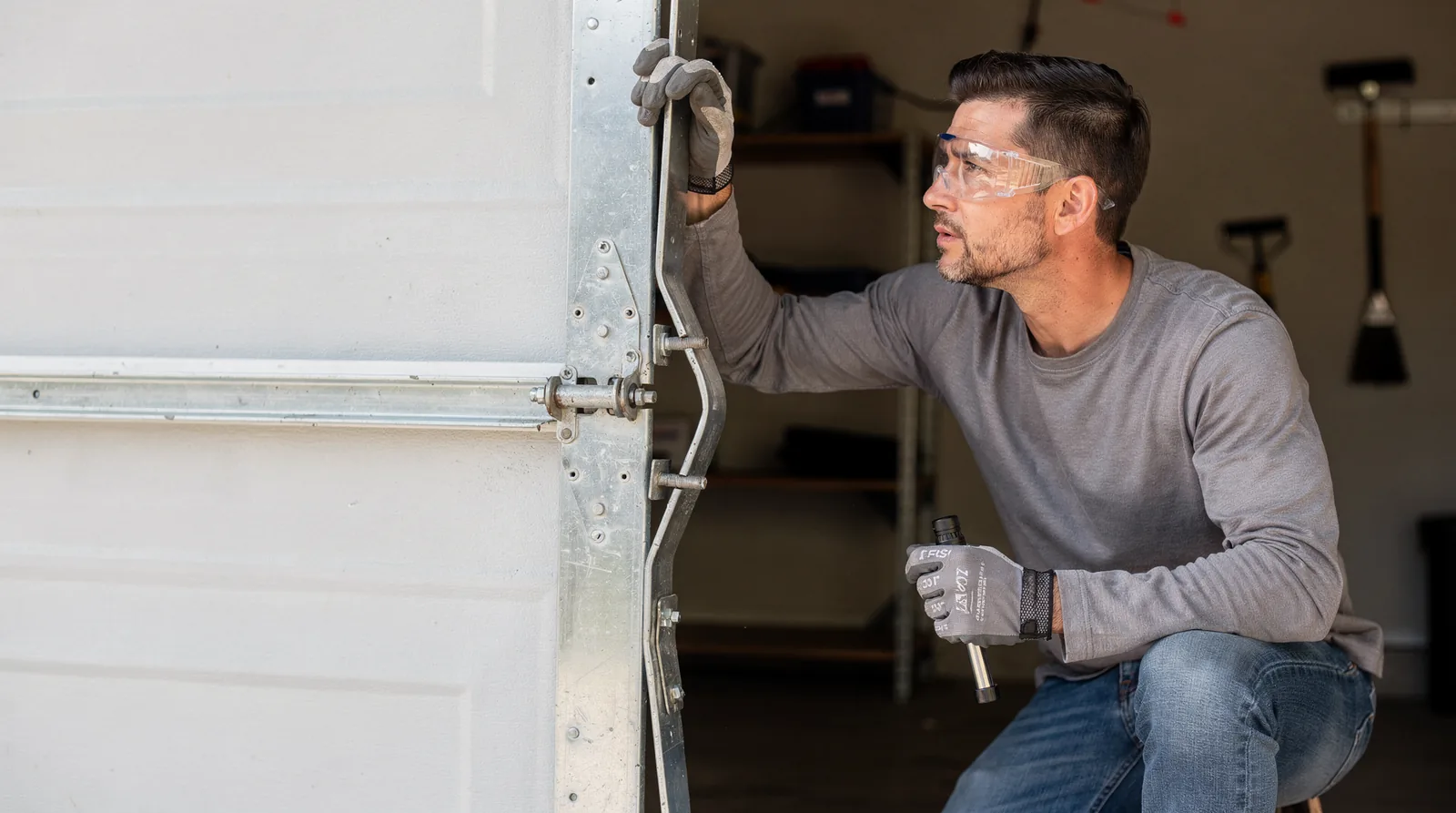
Look for dents, kinks, or warped sections along the metal rail. The track may appear pushed inward or bowed outward compared to its normal line. Gaps between the roller and the track channel also signal damage. These visual clues often appear after an impact, such as a vehicle bumping the door or an object falling against the track.
How does a bent track affect door operation?
A bent track makes it difficult to open and close the door smoothly. The door may stick, jerk, or stop mid-travel. A severely damaged or off-track garage door becomes inoperable and highly dangerous. Bent garage door tracks can lead to serious harm to people or property if left unaddressed.
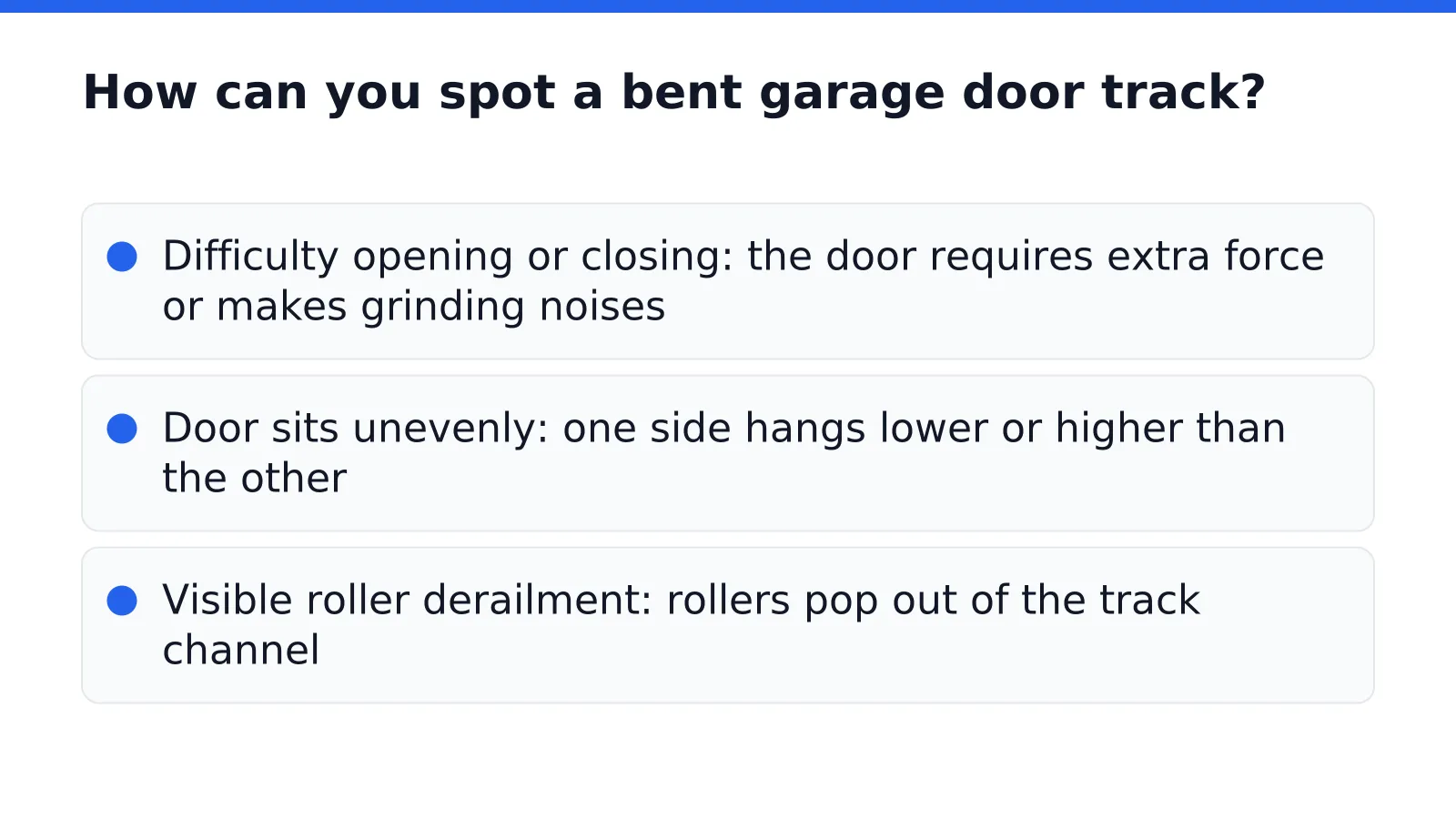
- Difficulty opening or closing: the door requires extra force or makes grinding noises
- Door sits unevenly: one side hangs lower or higher than the other
- Visible roller derailment: rollers pop out of the track channel
Precision Garage Door of Torrance earns trust through consistent, high-quality service. Professional garage door track repair addresses these issues safely. Prompt [Signs Garage Door Rollers Are Wearing Out: Garage Door Repair](https://precisiondoortorrance.com/?p=8840) prevents further damage and restores smooth, reliable operation.
Should you attempt garage door track repair yourself?
A bent garage door track is not a DIY project. Attempting to repair a severely damaged or off-track garage door yourself can lead to severe injury or death. Garage doors operate under extreme tension from heavy springs. These components store tremendous energy, and a sudden release can cause catastrophic harm. Leave professional garage door track repair to certified technicians with specialized tools.
What makes DIY garage door repair so dangerous?
Garage doors are incredibly heavy, often weighing several hundred pounds. The torsion springs that counterbalance this weight are under extreme tension. Releasing that tension without the proper training and equipment can cause the door to fall or the springs to snap. This creates a serious risk of crushing injuries or lacerations. Professional garage door repair technicians train for years to handle these hazards safely.
How do professionals handle bent garage door tracks safely?
Certified technicians use specialized tools to release spring tension in a controlled manner. They also have the experience to diagnose whether a track can be straightened or needs full replacement. Precision Garage Door of Torrance delivers round-the-clock, same-day service with technicians who meet these safety standards. Homeowners avoid significant risk by choosing professional intervention over a dangerous DIY attempt.
FAQ
What causes a garage door track to bend?
Garage door tracks bend from daily wear, physical impact, and structural building shifts. Vehicle collisions, loose rollers, misaligned brackets, and catastrophic mechanical failure such as a broken spring all distort tracks and leave doors inoperable.
Can a garage’s foundation cause track problems?
Yes, structural shifts from foundation settling, wall movement, or frost heave in the concrete slab change the geometry tracks mount to. This gradually forces tracks out of alignment, sometimes appearing months after visible foundation cracks or floor sloping.
Look for dents, kinks, or warped sections along the metal rail, with the track pushed inward or bowed outward. Gaps between the roller and track channel, plus sticking or jerking during operation, also signal damage.
Conclusion
In closing, understanding what causes garage door track bending, from impact damage and misalignment to rust and wear, empowers you to protect this critical home system. Regular inspection and prompt attention to warning signs prevent minor issues from becoming costly repairs. When track problems arise, professional assessment ensures your garage door operates safely and reliably for years to come.